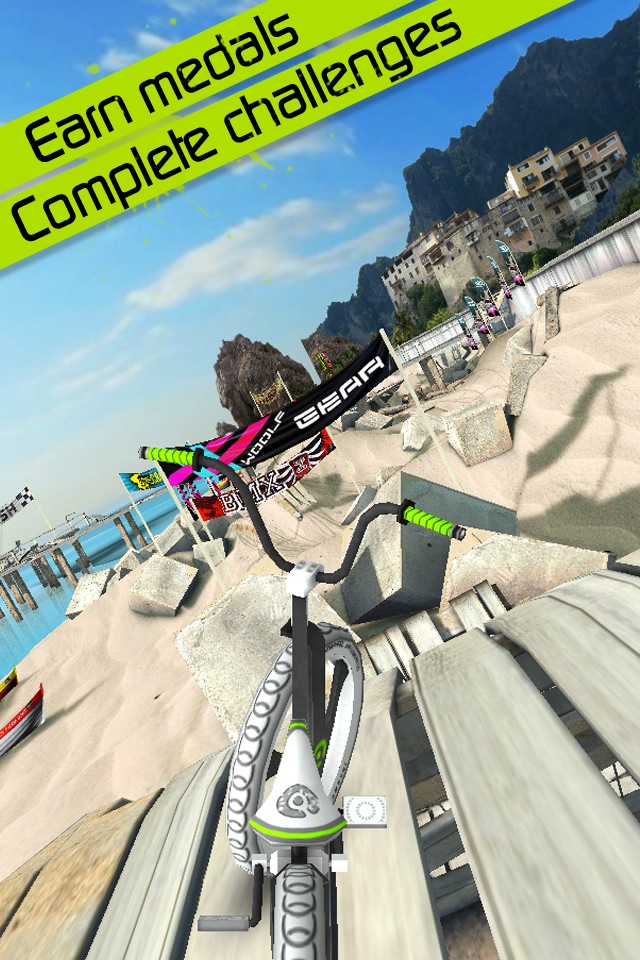
 Back in November of 2008, Illusion Labs' Touchgrind [$4.99/HD] was a remarkable display of what was possible on iOS devices. It had fantastic 3D graphics, a great physics system, and excellent multi-touch controls that let you interact with a skateboard in a way unlike any game before it. Now Illusion Labs is back with a new entry in the series called Touchgrind BMX [$4.99] that takes the formula into the world of trick biking.
All of the major traits that made Touchgrind so good carry over to Touchgrind BMX, and it even comes with many welcome improvements. But it's also missing a few features that I would expect in a game like this, and the multi-touch controls come with a steep learning curve much the same way Touchgrind's did. Such is the cost of innovation though, and Touchgrind BMX is definitely innovative. It's also a ton of fun once you get the hang of things, and those who persist in the ways of Touchgrind BMX will be rewarded with a truly unique experience.
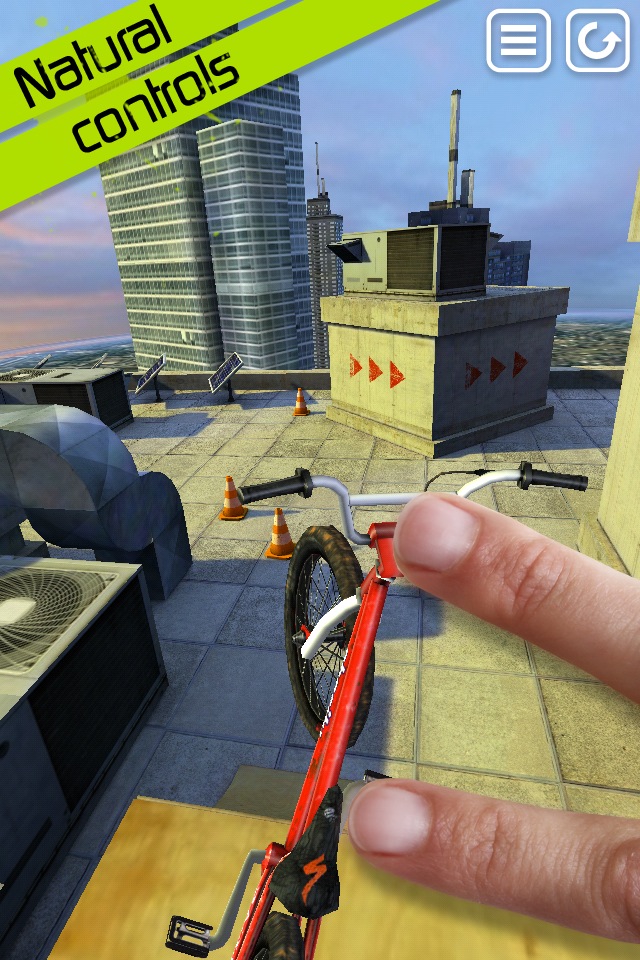
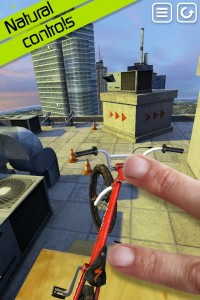 Like Touchgrind before it, Touchgrind BMX only requires two fingers to play. One finger controls the handlebars of the bike, and the other controls the frame. Using an assortment of different gestures, you can get your bike to perform just about anything you can think of. The gesture control is really organic, and moves are pulled off just how you'd expect them to be, like flicking the handlebars to spin them around while you're airborne.
A simple 3 part tutorial walks you through everything you need to know about controlling your bike, and it's all incredibly easy to understand. The challenge comes when actually trying to perform tricks in practice. It takes fast reactions and precise finger coordination to pull off the elaborate tricks and combos that will earn you the most points. It took me a few hours to actually feel pretty comfortable and start performing some more complex tricks, but looking at the developer high score challenges I know I still have quite a ways to go. It's a lot of fun though, and improving my skills is what keeps drawing me back into the game.
One major change from the original game is the perspective. Touchgrind was strictly top-down, whereas Touchgrind BMX is more of a third-person perspective. This works beautifully, and really opens up the environments in the game and allows you to actually see where you are going, which is nice because the background visuals are beautiful in Touchgrind BMX and are a huge step up from the sterile skatepark in the first Touchgrind.
The 5 courses in Touchgrind BMX are quite varied from one another, offering an assortment of terrain that runs the gamut from very realistic to borderline fantasy settings. There are some jagged edges in the graphics that could use a dose of anti-aliasing, but by and large Touchgrind BMX is gorgeous to look at and runs at an incredibly smooth frame rate.
 Another huge change is rather than having a sandbox environment where you're able to move about freely, the levels in Touchgrind BMX are linear courses with deliberately placed jumps and obstacles. You still have a small range of movement within the width of each track, and you control your forward movement, but you aren't allowed to stray off course and explore or go back to specific obstacles.
I actually think this design decision is for the best, as there is always a defined finish line to work towards and you must learn to maximize the scoring potential of every object in a level before you reach it. It's more goal-oriented in this way, and each level is filled with tasks to complete that will slowly unlock new features, like different bikes, paint jobs, and new levels.
The progression in Touchgrind BMX is balanced really well, and it seems like there's always some new reward or challenge waiting for you. It feels very much like the old Tony Hawk Pro Skater games in this way, which is definitely a good thing. The scoring system is also done really well, with a nice multiplier that rewards you for landing high value tricks, mixing up your variety of tricks, and not bailing. One glaring omission though is Game Center integration to coincide with the in-game achievements and high scores, though I wouldn't be surprised to see that added in the future.
While the linear nature of the game makes for a better overall experience, I definitely think there should be a sandbox level where you're allowed to ride around as you please. Part of the fun of Touchgrind was jumping into a free skate session and experimenting to your heart's content, and this aspect is missing from Touchgrind BMX.
One of the coolest features in Touchgrind BMX is the replay system. After crossing the finish line of any level, you have the ability to watch a replay of your entire run. The game automatically presents the replay from several different camera angles for maximum dramatic effect. You can also choose to save any replay to a list that's accessed from the main menu. From there you can choose to create a video file of that replay and either export it directly to YouTube from within the app or transfer it to your computer by way of the File Sharing option in iTunes when your device is connected. The whole process is simple and works extremely well.
While it's easy to point out some of the minor flaws, it's impossible to ignore just how excellent a game Touchgrind BMX is as a whole. Illusion Labs has taken the concept of multi-touch manipulation of an object to the next level, and has fleshed out a great gaming experience around it. It takes a lot of practice for the controls to click, but that process is also part of the fun. There is many hours worth of content to play through, with new levels already planned for updates, so it should keep you busy for a while.
Players in our forums are definitely loving this one, and whether you were a fan of the first game or you're just interested in a challenging and completely unique type of game, then Touchgrind BMX really delivers.
<!-- PHP 5.x -->



 <!-- Begin SexyBookmarks Menu Code -->
<!-- End SexyBookmarks Menu Code -->
<!-- Begin SexyBookmarks Menu Code -->
<!-- End SexyBookmarks Menu Code -->