Push-Cars [$0.99 / HD] is a puzzle game with a conscience. Like a pint-sized version of Pixar's Cars, you've got a bunch of anthropomorphic cars to handle. There's the eco-friendly ones like Sparky, the slow but green electric, and there's the gas guzzlers like Sixteen. Your job is to smash those gas guzzlers to bits while helping the others slip out of town.

It's not a complicated job. You're presented with a overhead city block, stylized and designed from real maps of American cities. The cars are positioned on the road, and all you can do is tap to rotate them. They can only go straight, and will drive until they hit something. Once you find a solution that will let the good cars escape and smash the bad cars into each other, a building or a dead end, hit the gas and it all plays out.

It sounds pretty straightforward (and maybe a touch heavy-handed), but in practice it's a lot of fun. The early puzzles are simple, but as more cars are introduced there are more elements to handle. The cars travel at different speeds, so lining them up to intersect each others paths can be tricky. Some can take off-road routes, others can leap over a single car or crush opposition beneath them. By the time you've met all the cars, you'll be faced with some major challenges. Even physics come in to play on some levels.

And that's just the first half of the game. Push-Cars includes 90 levels, with an additional 45 available with an in-app purchase. The first 45 take you across the country, visiting landmarks in New York, Vegas, San Fransisco and more. Once you make it through those levels, you head back to the start. There you'll find new levels that mix all the game's cars in on repeated maps. The difficulty curve isn't always consistent, but you'll find the later levels increasingly more challenging.

If the difficulty is too much, there's an in-game hint system that will show you the correct positioning of two of your incorrectly positioned cars. This is a big help, but there's a catch � the game only gives you and handful of hints to start, and rewards a few more throughout the game. Need more help? You can buy a pack of 10 hints for a buck. I might be dating myself here, but this gave me flashbacks to those old 1-900 video game tip lines. On the other hand, every puzzle is solvable without hints, and there's no downside to taking a trial-and-error approach, so I can't say this bothers me much.

Push-Cars' stylized maps add a lot of charm. You get a sense of looking down at the actual cities, but they fit in nicely with the game's cartoonish art. There are a few less-charming features. I wasn't big on the game's music, and toggled it off pretty quickly. It has a rather unique theme that's got to be an acquired taste. The menus are also unnecessarily complicated. Finally, on small devices it can be a challenge to tap buttons or cars that are too close to one another.

That's just the small stuff, though. On the whole, I'm quite happy with Push-Cars. I've still got a few Game Center achievements to pick up, but I'm rocking the leaderboards and I've devoured the puzzles. They're just the right mix of sadistic and fair. The developer's taking feedback on our forums if you have an opinion to share, and a lot of our users seem happy with the game so far. So why not give it a ride?

<!-- PHP 5.x -->


Powered By WizardRSS.com | Full Text RSS Feed | Amazon Plugin | Settlement Statement | WordPress Tutorials

Before I begin, I'm just going to pat myself on the back for this marvelously sensational sounding yet entirely appropriate headline. Alright, with that out of the way� OnLive CEO Steve Perlman is back to his old tricks of blowing minds and unveiling technology that is all too easy to dismiss as vaporware, impossible, and all the other things that got thrown around when OnLive was first revealed. To make this a little easier to digest, let's back things up a bit and discuss exactly what Shannon's Law is all about. If you've ever been at a concert, sporting event, convention, or any other densely populated event and haven't been able to use your phone, you've already experienced it first hand. Shannon's Law (or the Shannon�Hartley theorem) has to do with the maximum amount of error-free data that can be transmitted wirelessly, which is why you can't Rick Roll your buddy at a football game, place a call in New York City, and other common problems that have just become normal in the world of cell phones� Particularly as smartphones become more prevalent.

Dealing with the huge amount of data that smartphones use has turned into a massive problem for cellular carriers worldwide, but the latest breakthrough from Rearden Companies might change all that. They've made brand new radios that don't work anything like existing radios, and starting from the ground up have come up with a way to utilize the wireless spectrum in a way that isn't limited by Shannon's Law at all. With their earliest iterations of this technology they've been able to reach ten times what Shannon's Law says is possible. They also don't yet know the limit of just what they can do, but they know they can do "at least 100 times" what current cellular technology is doing in the same spectrum with 1ms latency at a few miles and 2ms latency at 30 miles.

Things get even crazier, though. Naturally you'd expect this new wireless technology to be both massive in size and complexity, but according to Perlman the radios are actually much simpler with a single antenna and use much less processing that's even taking place in current cell phones. That 30 miles mentioned before? That's not only beyond the curvature of the earth, it's also farther than a television station will transmit. Speaking theoretically, they expect to be able to reach 250 miles and the only reason they're even citing the 30 mile number is because of the time limitation of driving back and forth from test stations.

Perlman notes that the implications of this technology are "profound," and it's hard to disagree. Shannon's Law and the very real world limitations that we've all experienced using our cell phones is a serious issue for wireless engineers desperate to expand capacity to support the growing number of data-sucking smartphones in the wild. Beyond that though, with the latencies they're able to attain as well as the transmit distance, this could completely change the face of broadband in the world which has historically always been plagued by the last mile.

Aside from that, speaking specifically from a mobile gaming perspective, the massive decrease in latency would make twitch-based games completely playable without gobs of predictive netcode to compensate for massive ping times via current cellular networks. It's not hard to go wild speculating all the benefits this new technology could provide.

I know it's easy to dismiss all of this as impossible, wizardry, witchcraft, black magic, technobabble, or whatever other way you'd like to describe it. Consider this though: When OnLive was unveiled it wasn't entirely uncommon to see editorials like this one citing all the reasons why OnLive couldn't possibly work. But it does work. OnLive has been online and fully operational for over a year now. I've played games to completion using the service without issue, and the recent addition of the Micro Console to my household has made gaming with OnLive even better.

Specific details on how all this works are yet to be released, and it's hard to say how long it will take this initial unveiling to turn into an actual real-world product… But, the future looks bright and I'm overjoyed to have people like Steve Perlman in this world.

[via Engadget]

<!-- PHP 5.x -->


Powered By WizardRSS.com | Full Text RSS Feed | Amazon Plugin | Settlement Statement | WordPress Tutorials

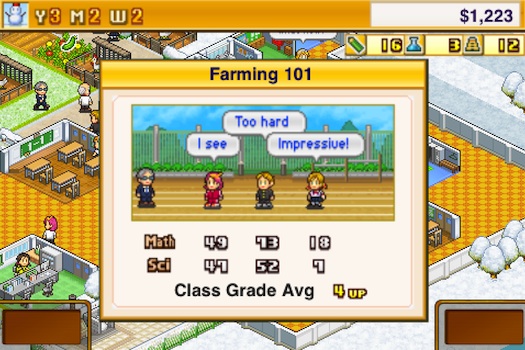
Kairosoft's Pocket Academy [$3.99 / Lite] takes the best and worst elements of its prior releases, Game Dev Story [$1.99 / Lite] and Hot Springs Story [$3.99 / Lite], blends them together, and then applies them to a school environment. It's not remarkable on the surface. It has the same cutesy art direction used in these prior games. It also re-hashes a lot of mechanics, continues to shroud a lot of its crucial foundational and tycoon elements in mystery, and it controls like crap. But it does still deliver in the form of the studio's should-be patented carrot-on-the-stick design approach and fleshes out a crucial, but oft-forgotten, driver in all simulation games: the people.

Provided the gun to my head wasn't real, I'd argue until the moment the trigger is pulled that Pocket Academy isn't as much of a school simulation as it is a over-the-top student simulation game because, at the end of the day, this game isn't about how pretty your school is or about how many trees you've planted. It's about what your kids are learning and how well they can prove that your system, either totalitarian or social-focused, works.

On the top end, this game puts you in the shoes of an administrator planning out the next greatest thing in education. You're in charge of building classrooms, researching new facilities like restrooms, libraries, and nurses' offices, and creating statistical bonus zones with bonus-laden objects like shrubbery, trees, or even rocks. Chaos is frowned upon, as the careful planner who puts like buildings together can string together dramatic bonuses to student-side factors like learning and school spirit.

This is where the one real rub rears its head: Pocket Academy isn't good at telling you what is "good" versus "bad." It hides a lot of bonuses and mechanics from viewing. The only solid way to find out what works well with something else is via experimentation, which is a costly and horribly slow, pace-chewing endeavor. Even buildings and research subjects have terrible descriptions that can lead to hair-pulling strategic misfires.

Like Game Dev Story understood, to some extent, the development process and let you lead it, Pocket Academy allows you to do the same with a school. The end product is a well-learned student body, and you get several years to turn kids' mush into iron.�Ample classrooms and activities are a necessity to do this, as well as teachers. Students come in once a year or through transfer if your school is attractive enough. Teachers, on the other hand, need to be hired and then leveled up. Satisfactorily, you are put in charge of what statistics receive boosts upon leveling up, which lets you mold a curriculum that feels… well, you. It's pretty redeeming building something in your own image.

Science, math, English, Spanish, and history are the subjects each student can learn. As they sit in classrooms, they'll automatically receive points in these areas. As they roam and participate in other facilities, they'll earn additional points that you can then, in turn, spend in classrooms to boost their core attributes or apply to research. This is the push and pull: do you spend these points in order to get more areas for interaction, or do you spend them to educate the students more?

I usually go with the latter since it's the real meat of the game. In order to attract more kids, you need to compete in challenges based on those core subjects. The higher the IQ, the likelier they are to pass the challenge. Also, schools as a whole are rated and a lot of funding, as well as those ratings, depends on end-of-semester test scores. The goal is to be the best school in the world, so the students actually matter. But the other decision is a fundamental one, too. Without interaction, you don't get points for research or tests.

Weighing these two options, as dull as they sound, is entertaining. I think it helps that there's always something you could be doing in the process or, at least, building towards.

To its credit, Pocket Academy really fleshes out who these kids are. They're all named and you deal with them over the course of several years. You'll also see them make friends, attempt to date other students, get frustrated, succeed, and fail. Students all have certain disposition traits, too, which factor into how they learn and where they learn the best. As if that wasn't enough, there are also activities they favor which you can cater to by building clubs or more facilities.

After spending years with these kids and using them in the right way, you do tend to bond with the character, as silly as that sounds. But it's that connection, as flimsy as it is, that makes this simulation game much more satisfying than most. You have a stake in the systems, at least.

I could go on and on about the systems at play, what you can do, and the billions of little things that you'll end up doing to improve the experience. There are tons of mechanics and little touches at play in Pocket Academy, all of which are satisfying to some extent to use, deal with, or think about. The game starts brutal, so be prepared.

I have a feeling that, like Game Dev Story, you'll run out of meaningful things to do in Pocket Academy after an epic several-year run but I don't think that hurts. As it is, there are plenty of things � perhaps too much in places � to do for several, several hours.�For those of you who didn't download sight unseen, no worries: this is a sharp little simulation game packed with depth and, oddly enough, a little emotion. It might be hard to penetrate at first, but stick with it and you'll be rewarded with an awesome game.

<!-- PHP 5.x -->


Powered By WizardRSS.com | Full Text RSS Feed | Amazon Plugin | Settlement Statement | WordPress Tutorials

My ability to write an amusing introduction for this week's bucket full of Wednesday night game releases has been obliterated due to my mind being blown that the powers that be are still making James Pond games. Maybe it's just me, but my perception of James Pond as a video game mascot was about in line with Bubsy. In the 90's it seems like everyone and their brother in law was trying to come up with the next Mario or Sonic, and I'm really not sure any succeeded. I suppose persistence isn't a bad thing though, and you can't fault 'em for trying. I'll still play a James Pond game 21 years later!

Anyway, here's how this works� Developers are able to set specific release dates for their iOS games. Since App Store features are updated on Thursdays, it seems that's most beneficial day to release a game if you're shooting for featuring. Of course the whole featuring process is a closely guarded secret surrounded by black majicks, so who knows if releasing on a Thursday even helps. Regardless, with a specific release date set, games become available in the regions of the App Store as it becomes that date. Thanks to New Zealand's proximity to the International Date Line, they get a first crack at everything. All of these games will be available at 11:00 PM Eastern, or earlier if you're east of North America:

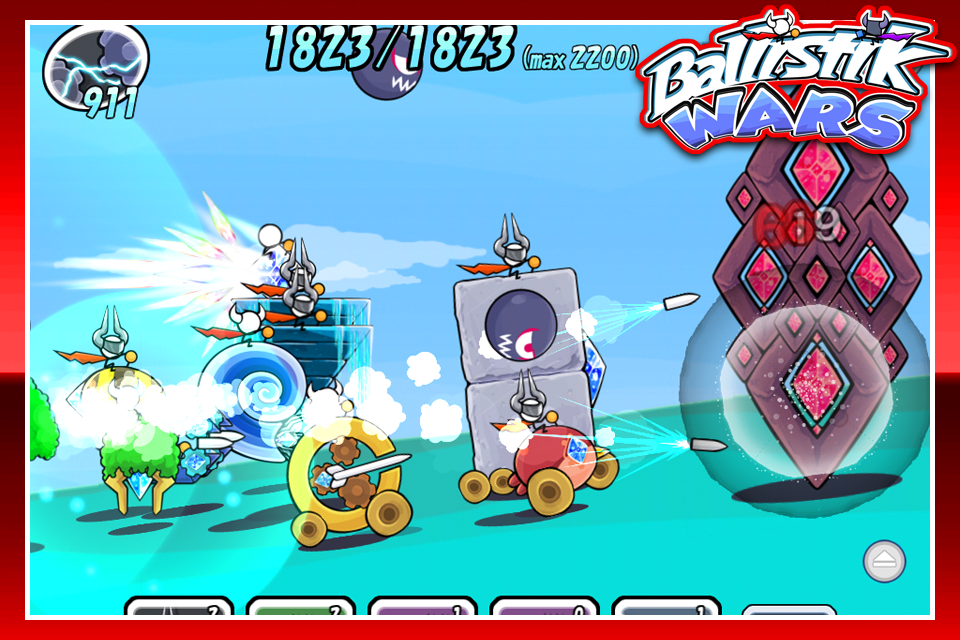
Ballistik Wars, FreeForum Thread � I'm not entirely sure yet what the catch is with this game being free, but I've loved everything Ponos has released so I'm going to go out on a limb and guess that Ballistik Wars will also be great. I could be wrong, but seriously, Ponos has a great game catalog.

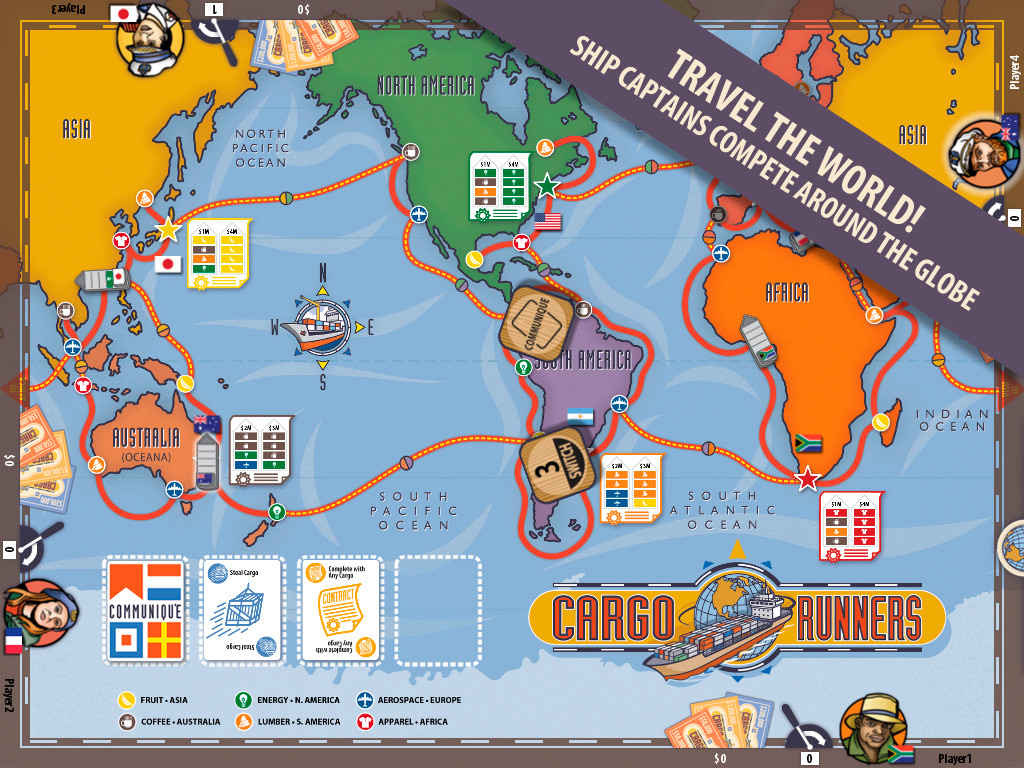
Cargo Runners, $7.99Forum Thread � This is the second entirely iOS board game by Trouble Brothers. Cargo Runners is a 2-4 player game where you race around the world collecting cargo. I've had a great time with board games on the iPad, and it's great seeing brand new ones being developed for the platform.

Color Bandits, 99� / HDForum Thread � I'm digging this game's gimmick. Apparently aliens have stolen color from the world and you're fighting to get it back. The whole black and white slowly transitioning to color thing seems really cool. And, hey, boss fights.

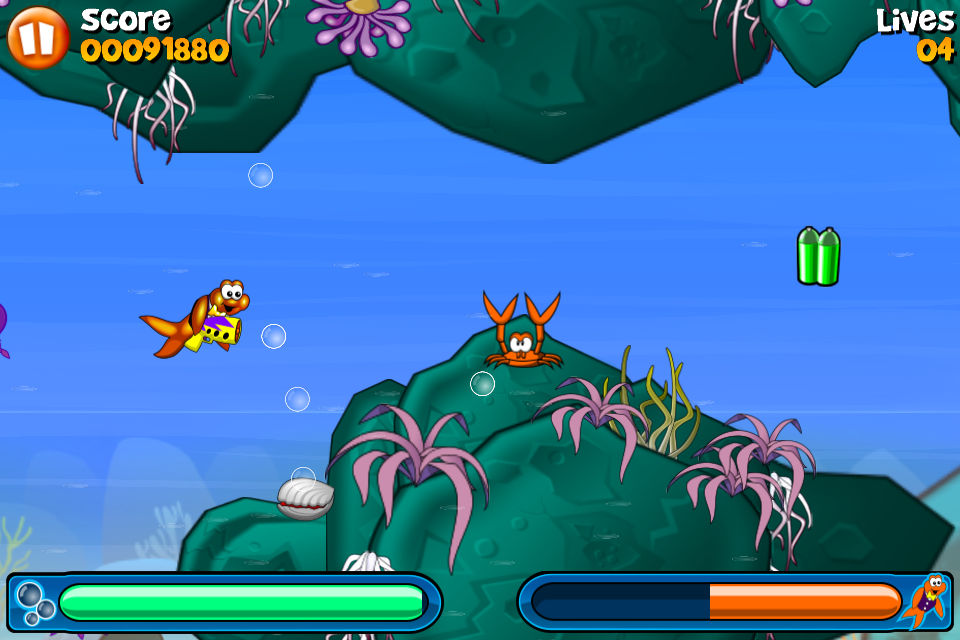
James Pond in the Deathly Shallows, 99�Forum Thread � Agent Pond RETURNS!!! Oddly enough, James Pond games (at least the ones I played) always had lots of platforming elements, this one seems to be more of an underwater-themed horizontal shooter. Regardless, it's universal, a buck, and based on some great (although likely unknown to most) IP.

MapleStory Cygnus Knights Edition, $4.99Forum Thread � This is the second single player MapleStory game to be released on the App Store, the first of which being MapleStory Thief Edition [$4.99]. It's a bit of a mystery to me why they don't just bring a full MapleStory client over to iOS, as surely recent devices have to be powerful enough to run it… But, I guess they wouldn't be releasing Cygnus Knights if Thief didn't do well.

Mooniacs, $1.99 / LiteForum Thread � Namco is taking a crack at the "casual physics based puzzle game where you do things to earn stars" genre. (That is a genre now, right?) I tried this game at E3, and it's actually pretty cool. You fling your little dude up to catch flying things called "JujuBees." Namco has an interesting plan for releasing new updates, and additional content will apparently be unlocked as people globally reach some collected JujuBees threshold.

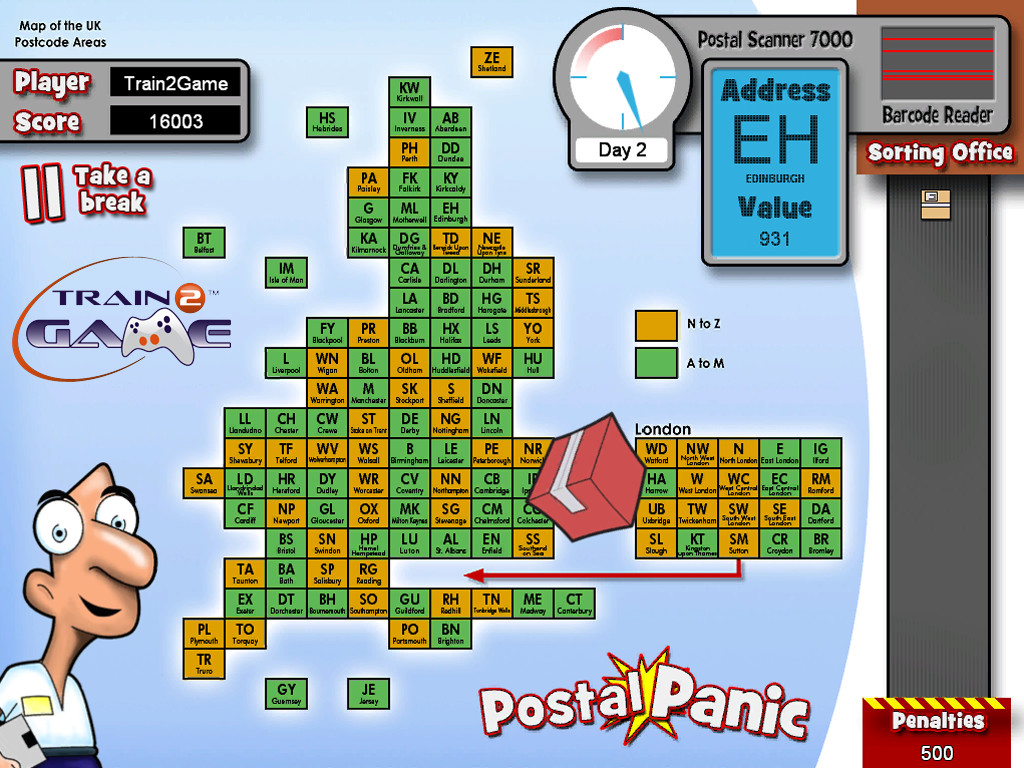
Postal Panic, FreeForum Thread � This is a sorting game, but instead of needing to sort colors or shapes like so many sorting games out there you're sorting packages to a specific zip code as they come across a postal scanner. It seems like a clever real-world spin to the typical sorting game type.

Puzzle Agent 2, $4.99 / HDForum Thread � The original Puzzle Agent [$4.99] won a ridiculous amount of rewards last year, and I'm expecting the sequel to be just as awesome. Like the first one, Puzzle Agent 2 has Professor Layton-like puzzle-centric gameplay with a heavy coating of that signature Telltale Games charm.

Street Fighter IV Volt, 99�Forum Thread � This is basically Street Fighter IV [99�] but with online multiplayer. Oh, and it's got Balrog, Vega, and Cody which aren't available in the non-Volt version. Also, Capcom is planning on doing some kind of wacky incremental price raising where they're hiking the price by a buck each day it's out until it caps out at $6.99. Street Fighter IV was excellent, and the addition of online multiplayer in Volt should make this an easy day one purchase.

<!-- PHP 5.x -->


Powered By WizardRSS.com | Full Text RSS Feed | Amazon Plugin | Settlement Statement | WordPress Tutorials