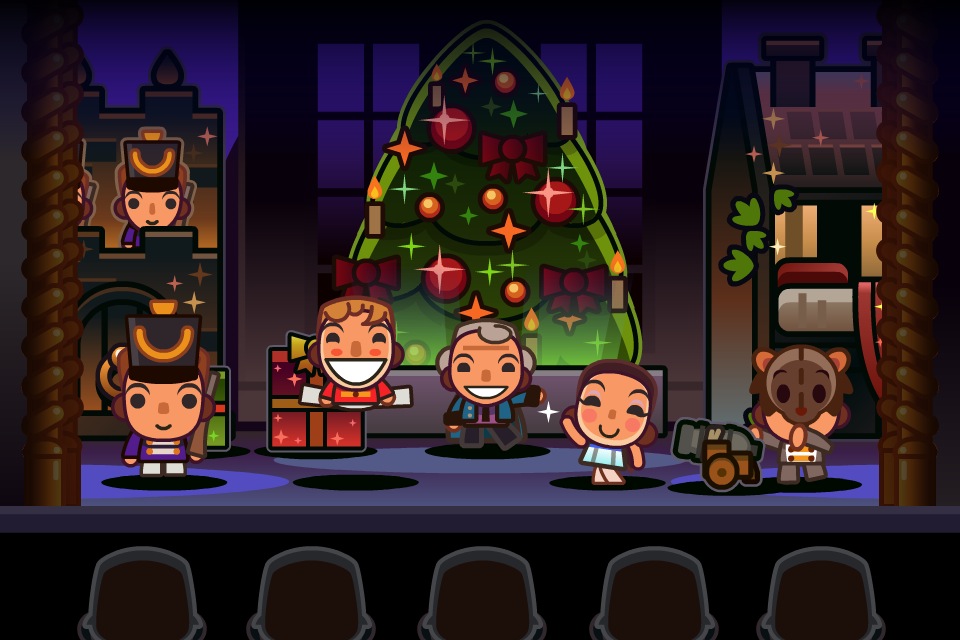
 Making opera and ballet seem fun and accessible must be an uphill battle. There's no shortage of people with preconceptions about the arts, and most of those preconceptions are about how opera houses may be great places to take a nap. But if The Show Must Go On [$0.99] is any indication, the Royal Opera House has what it takes to make opera interesting to any crowd -- or at least, to put it into the hands of those that can.
In this case, that's Hide & Seek and Big Pixel Studios. They've come together to make a sweet and compelling mini-game compilation about the life backstage at the opera house.
Apparently, life backstage at the opera house is crazy. As stage manager, your job is to put out every (proverbial) fire that crops up, and they are everywhere. The performers can't dress themselves without your help, the sets are falling apart, the music has gone flying, the props are all mixed up and the lights are just barely running. It's all you can do to keep the whole thing from falling apart.
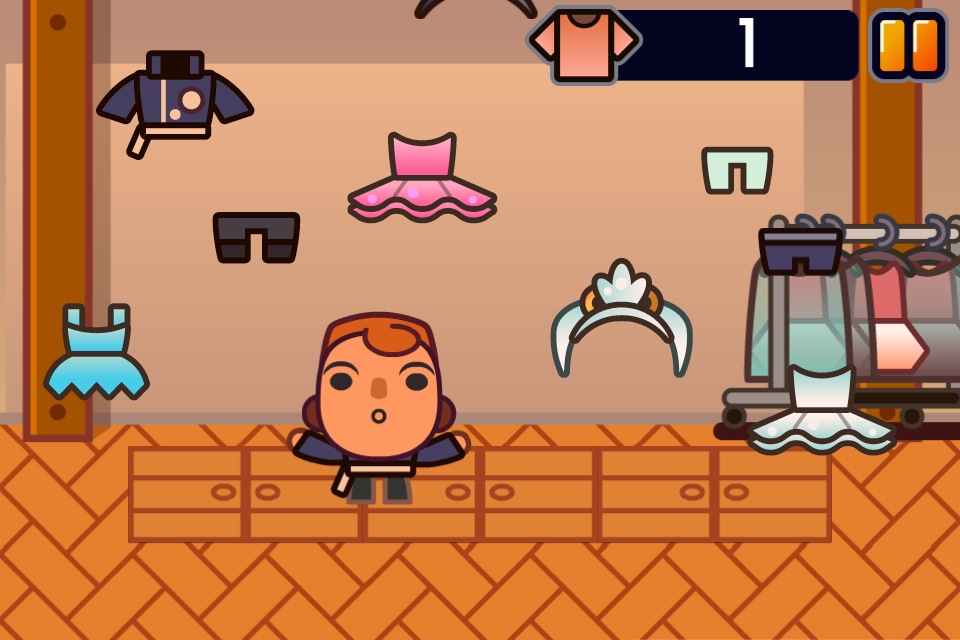
So off you run, from department to department, saving the day. Each department has its own mini-game. Managing costumes takes a good memory and good reflexes -- you're shown costumes, and then you lead the corresponding performer around the room, dodging falling clothes until you find the pieces you need, then repeating. Props are pure memory. You're shown the dollies they ought to be on, and once you've memorized them you're put on a timer to place them correctly. More and more props are added as you progress.
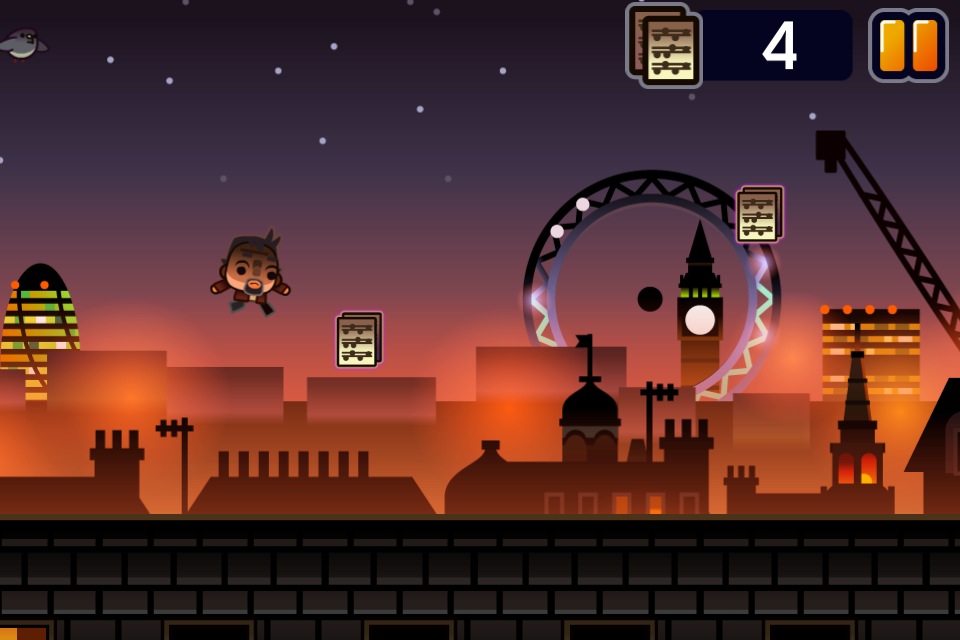
Preparing the sets requires a neat little stacking game with elements of physics puzzles, especially as they grow more difficult and your stacks grow ever more precarious. Managing music is a bit like Canabalt -- you race over rooftops collecting music, dodging chimneys and trying not to fall down any holes. And the lights... managing the lights is a difficult task. You can see the paths your performers will take across the stage, and its your job to light their way without wasting any precious power. It requires precise timing and no small amount of multitasking.


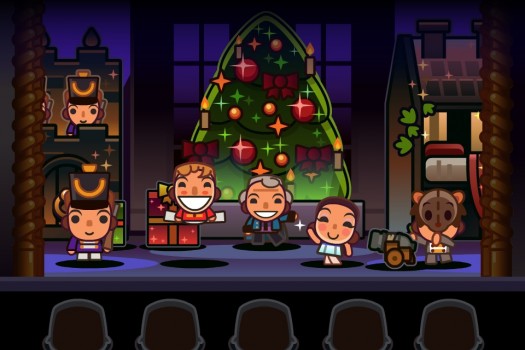
These mini-games are wrapped in an absolutely darling opera simulation. There are four shows in Performance mode -- The Marriage of Figaro, Swan Lake, Carmen and The Nutcracker -- and each has its own little tale of disaster to cope with. At the end of each you're treated to a short performance of the show, which succeeds or fails relative to your success in the mini-games. I have to admit that while I wanted to see the shows succeed, there was a (large) part of me that wanted to play again just to see how badly they could fail.
Once you work your way through the performances, you can pay to unlock Score Attack modes for each of the mini-games. The costume score attack mode is included, but the other four are a dollar a piece. I do have a small quibble with this, as the app description really doesn't make the need for these purchases clear, but I bit the bullet so you don't have to. It's fun to play endless versions of the mini-games, but the real charm is in the aforementioned Performance mode.
Another question stands out, though: why so little music? The included songs are provided by EMI, but there are only a few of them. Given that the one of the purposes of this game has to be to raise awareness for the Royal Opera House (and to sell a few albums to boot), shouldn't it be brimming with music? This is a missed opportunity, and it smells a bit like a licensing snafu from here.
Otherwise, The Show Must Go On is thoroughly impressive. The art is cute and welcoming and the games are fun, with quite a range of difficulty levels. The music that is included is, of course, great. There's even a broad selection of Game Center/OpenFeint achievements and leaderboards to extend your playtime. I'm not sure it will create any new opera fans, but it certainly shows that there's more to opera than meets the eye, especially when you approach it with a light heart and good cheer.
TouchArcade Rating:


 On this week's TouchArcade Show, we spend a good chunk of the introductory phase of the show talking about the latest and hottest ... in console games. But immediately after my Skyrim outburst and our shared Modern Warfare 3 discussion, we DO dig into iOS. Jurassic Park: The Game leads the foray. Games like Minecraft: Pocket Edition and Space Tripper, as well as news stories including Apple's decision to pull Texas Hold'Em round out the rest of one of our rocking-est podcasts yet.