Labels:

One of my favorite things about the App Store is because of how fast it moves, you never have to wait too long to see trends forming. Thinking back on it, the entire existence of the iPhone is little more than a flash in the world of technology, even though its release back in 2007 (and the launch of the App Store in 2008) feels like ancient history now. A number of things have changed over the short life of iOS devices, but I think the change that had the largest effect on App Store was Apple shifting gears to allow the free to play market to take hold.

When Steve Jobs initially announced the in-app purchase system, he made sure to emphasize that only paid apps would be allowed to use it. Or, as he put it, "free apps remain free." Apple doesn't often change their tune, but they did in a big way on October 15th of 2009 when they opened the free to play flood gates. Moments later, ngmoco announced that Eliminate would be free, officially kicking off the free to play revolution on the App Store and energizing an incredibly vocal minority who were sure that this would be the death knell of iOS gaming in one fell swoop.

Since Apple rarely reveals statistics on both the sales of iOS devices and the number of apps downloaded (200 million device sales and 15 billion downloads, per last count.) if you want to delve any deeper than that you need to get third party analytics firms involved. Flurry is one (of many) of these companies, and they've currently got their analytics package installed in over 90,000 different apps spread across over 40,000 different companies. This gives them a massive bucket of data to run all kinds of different reports which they throw up on their blog from time to time.

The latest out of Flurry is that free to play games are responsible for 65% of the revenue in the top 100 grossing list, compared to only 39% earlier this year. If you're the kind of person who would rather see this data in chart form, well, you're in luck:
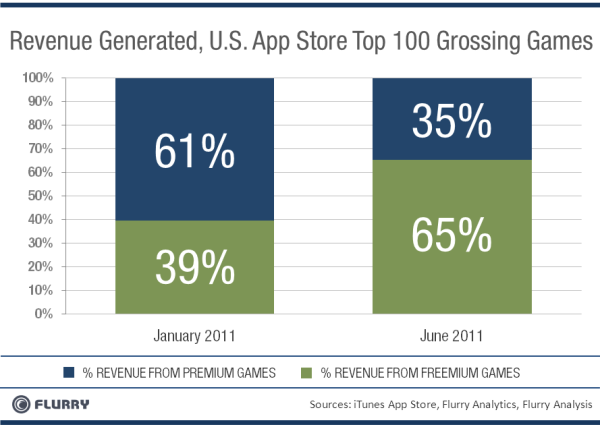
Now, I'm sure there are skeptics out there that right now are thinking to themselves, "Whoa, whoa, wait a minute. The top grossing lists go to 200. These numbers are skewed in favor of free to play by chopping off the bottom half of the list!" I followed that path of logic too, since it can often be easy to manipulate statistics to promote an agenda of sorts. However, after speaking to several developers with games all over the top 200, it seems that in calculations like this positions 100 to 200 (and beyond) aren't worth that much consideration because of the extreme bell curve of the top grossing lists making 200 essentially insignificant compared to #1.

What does this mean for iOS gamers? Well, the writing has been on the wall for quite a while now that free to play is taking over the App Store. It's not a hard decision for developers to make either when laying out plans for future games either. With a 99��paid game, your profits are completely tied to your chart positioning and your options are incredibly limited for promotion, often relying entirely on making your game free and crossing your fingers for a surge of sales when the sale is over. Comparatively, there's all sorts of neat tricks to make money from a free game, even with horrid chart position.

Thankfully, even though Zynga put the original bad free to play taste in everyone's mouth with Farmville on Facebook and many developers followed suit with similar iOS games that centralized around time sinks and pay walls, there is light at the end of the tunnel. On the Mac/PC side of things, games like League of Legends and recently Team Fortress 2 have been providing some fantastic "core-gamer" experiences while being totally free. I'm sure eventually games like these will filter down to mobile devices, as it's basically impossible to argue against the financial incentive being there through a massive customer base eager to download (and optionally pay for) free to play games.

Powered By WizardRSS.com | Full Text RSS Feed | Amazon Plugin | Settlement Statement | WordPress Tutorials

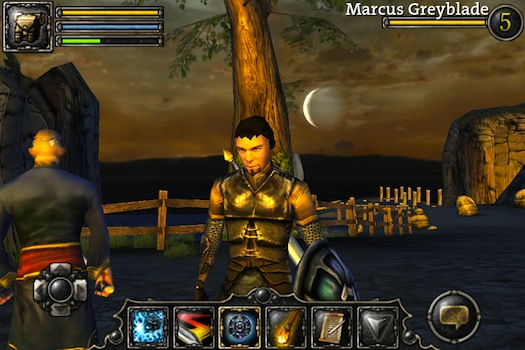
Crescent Moon's Aralon: Sword and Shadow is one of the App Store's meatier games, so it often demands a meatier price point. If its standard price of $9.99 is too much for you to swallow, I think you'll dig this news: the game, which is a Universal app, is now just $4.99. That's, like, a total of five dollars of savings! Think of all the things you can buy with the money saved!

In case you didn't know, Aralon is one of the most advanced RPGs on the App Store. A convenient analogue is the Elder Scrolls series, which generally boasts the same attributes: first-person perspective, somewhat deep spell combat systems, tons of quests, and an open-world. We reviewed it awhile back, so give that a read if you're interested in learning more.

A new update, by the way, has hit since we last talked about Aralon. The latest version has hammers and maces, as well as 'specialty' IAP items. Several bug fixes, including the crash bug in Uthu's Fortress, have been fixed, too. Not too bad for a free update.

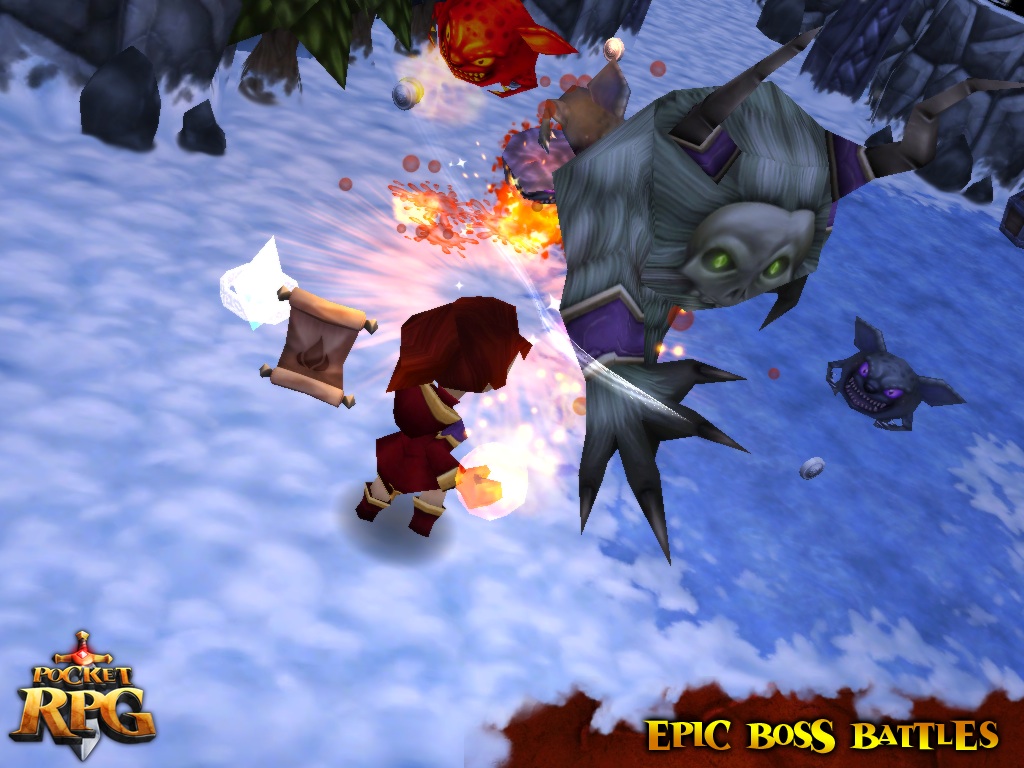
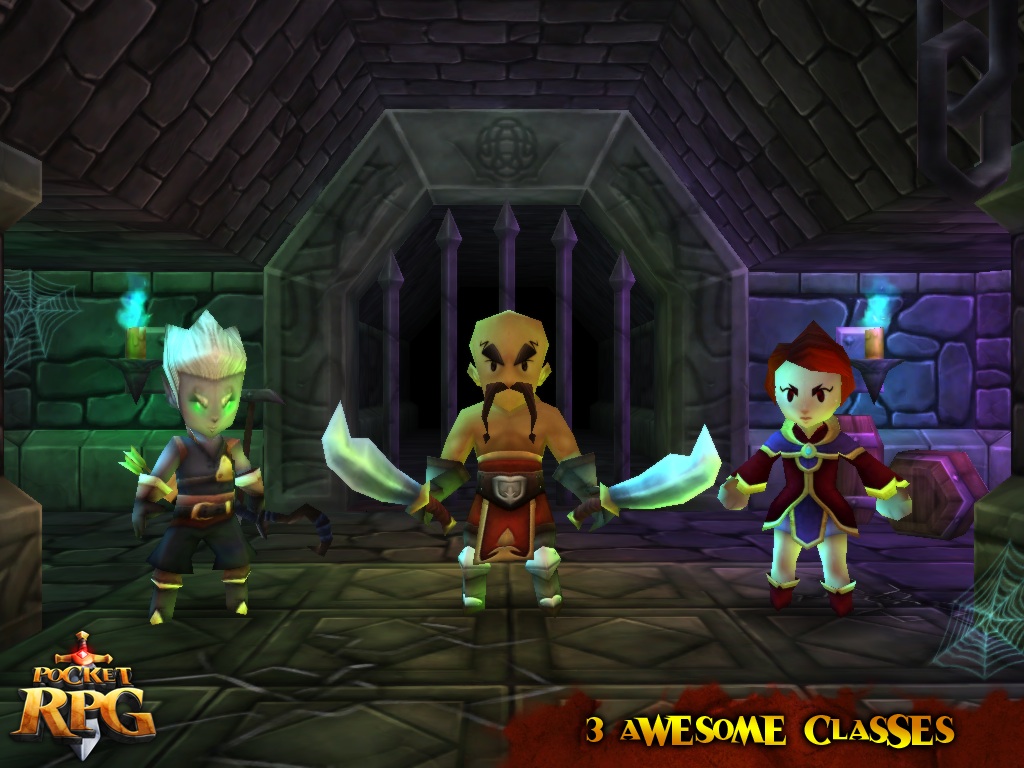
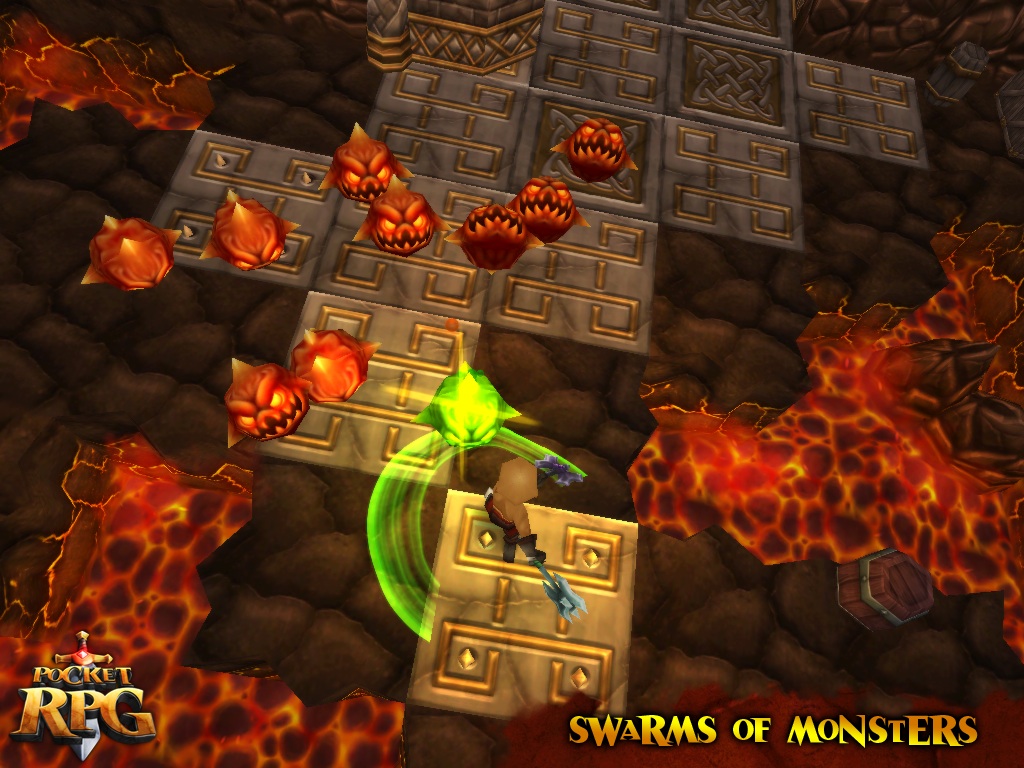
In other Crescent Moon news, the studio has given us a few new screens of Pocket RPG, which development for appears to be going well. We're told that the game will launch alongside an update that adds "target assistance" (read: auto-aim) for casual players and includes notable refinements and tweaks to the overall product. Neat! Now, check out those screens I mentioned earlier:

Pocket RPG launches this Thursday, July 14th.

<!-- PHP 5.x -->


Powered By WizardRSS.com | Full Text RSS Feed | Amazon Plugin | Settlement Statement | WordPress Tutorials

Labels:

If you're looking to buy a new external hard drive either for your desktop or a more portable one for on the go storage, you now have another one to choose from.

The new line of LaCie Porsche Design P9000 hard drives come in desktop or mobile versions, they are by far some of the most stylish ones we've seen in a long while. Each clad in a 5mm thick aluminum casing that goes beyond aesthetics to help protect the drive inside and dissipate heat.

Available in sizes ranging from 500GB up to 2TB, they also sport USB 3.0 technology, so those decidedly unsexy file transfers are over as quickly as possible. Pricing ranges from $105 to $160.


[via LaCie] Related Posts with Thumbnails


Powered By WizardRSS.com | Full Text RSS Feed | Amazon Plugin | Settlement Statement | WordPress Tutorials

Adding color to a black and white world isn't exactly a new concept in games, but Kaia Games' Color Bandits [99� / HD] attempts to add that layer to a side scrolling shooter with a resemblance to Contra in terms of gameplay, but not in challenge.
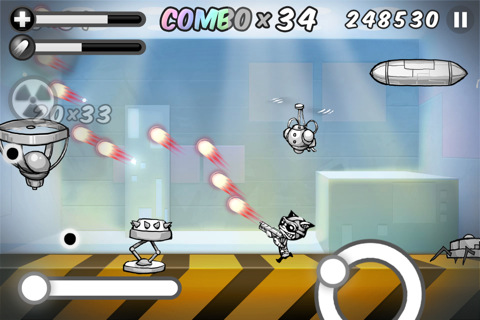
As far as story and setting is concerned, Color Bandits keeps it as simple as possible. An evil steam punk boss has stolen color from the world and you, a cat with a gun, needs to reintroduce color by blowing up robots. To do so, you'll travel across six different stages each broken up into three different levels, but the levels aren't levels in a traditional sense, they're just checkpoints scattered throughout each linear stage.

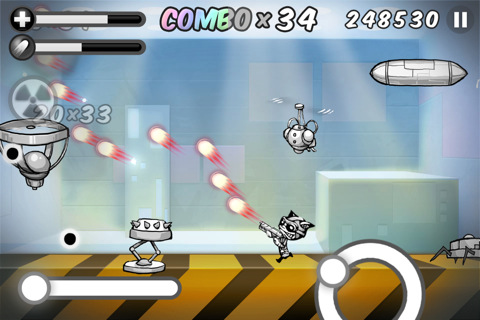
Control wise, you control the forward and reverse of you character with a slider on the left and the shooting direction with a right analog stick. The screen moves automatically to push you toward the right.

From there, enemies pop up and attack you in a wide variety of ways. For the most part, you'll spend your time dodging and shooting and for the bulk of the game, it's not a difficult affair. You can shoot somewhat randomly and you'll usually survive the onslaught. By the last couple of levels, you'll feel an actual challenge coming up, but it ends up being a little too late. Along the way, you'll get weapon power-ups, but you only get a small portion of bullets and most of the weapons feel similar to one another.

You can cruise through the main campaign in under an hour, but getting three stars on each level is a lot more complicated. The combo system is a bit unusual in that you rack up combos by shooting enemies, but the second one dies, the combo meter starts counting down. You don't lose the whole combo if you miss a shot, but it counts down quickly enough you'll get frustrated more enemies aren't the screen. By stringing together the combo kills you'll multiply the score of each kill and the higher the score, the more stars you'll get at the end of the level.

Once you get about halfway through, you'll unlock a survival mode, which is the same core game but the screen doesn't move to the right. The mode is all about high scores, which can be shared and compared on Crystal and Game Center.

Visually, Color Bandits has a hand-drawn aesthetic to it. The character and enemy designs look great and are tinged with a steam punk aesthetic without being overwhelming. As you improve your score and get more stars, the background starts to fill in with color. While they're relatively static, the backgrounds are well done and the transition from black and white into color is subtle, but works well.

The foundation of Color Bandits is a casual take on a Contra-style shooter but since you can't jump, the game can't ever get as complicated as Contra. It tries to make it up by bombarded you with enemies in the end, but it's going to be too little too late for a lot of players. That said, Color Bandits might be a better high-score game than it is a shooter.

Even looking at Color Bandits as just a high-score game, it's hard for it not to feel stale toward the end. The experience doesn't change throughout the levels, which for a game this short isn't necessarily a big deal, but it would have been nice if things were mixed up a little throughout. Even still, the high-score nature of the experience makes it an enjoyable experience for anyone who has that part of their brain take over when a score is in place. The controls are precise and work terrifically, even if the campaign isn't particularly amazing, the survival mode is well executed.

<!-- PHP 5.x -->


Powered By WizardRSS.com | Full Text RSS Feed | Amazon Plugin | Settlement Statement | WordPress Tutorials