Screen Technologies! After monochromatic displays, we had LCDs for a long time, then all of a sudden, we seem to be bombarded by new technologies. OLED, AMOLED, Super-LCD, Super-AMOLED, Clear Black Display, LED, 3D, Retina Display… there are so many we can't even begin to wrap our heads around.

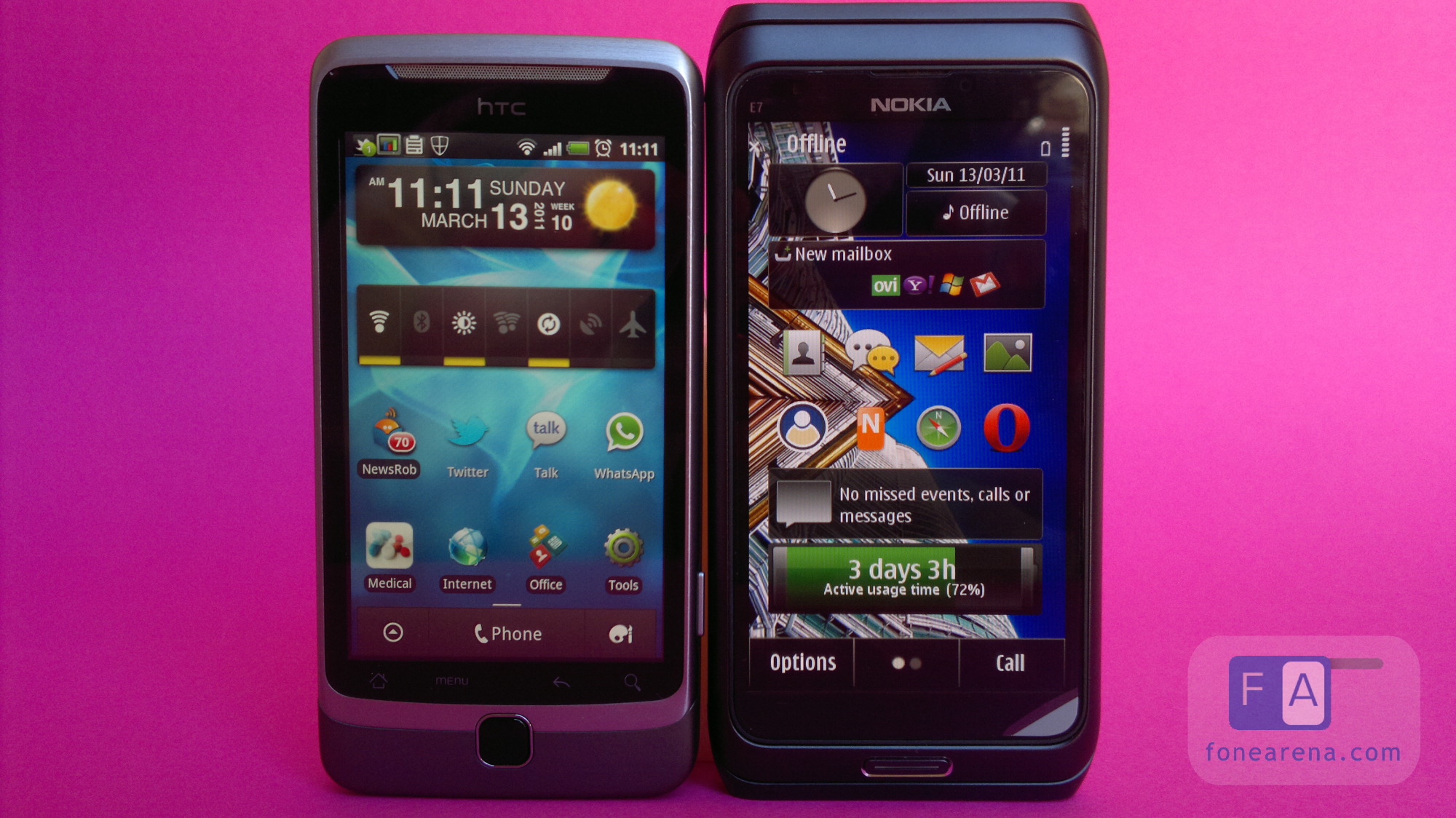
In this post, we will show you a few pictures to compare the Super LCD display on the HTC Desire Z and the AMOLED Clear Black Display on the Nokia E7.
Brightness Settings
Even though this isn't a factor due to the screen technology, but to the manufacturer's setting of the display, I thought it'd be interesting to mention the differences in brightness settings between both, as this is what the end user will be stuck with, when choosing a device (and hence a screen technology and a manufacturer setting) over the other.
One of the downfalls of the E7's screen experience for me has been the big limitation on display brightness controls. No matter how low you go, the Clear Black Display will remain way too bright to be used conveniently in a dark room. And no matter how high you go on the setting, it will remain a bit darker than other displays, and you feel that there is some additional brightness that can be squeezed out of it.
By comparison, the Super LCD on the Desire Z has a larger brightness spectrum, going from very low light that is appropriate for dark rooms, to super bright for outside usage.
Battery Usage
Thanks to its AMOLED nature, the CBD display uses less power when used to display dark colors, and almost no battery at all for black. This makes it possible to let the E7 display a large clock as a screensaver, at all times, without any significant reduction of the battery life. You can also improve your device's battery stamina by choosing a darker theme and backgrounds, and preferring applications with dark backgrounds (like the dark theme on Gravity for example).
By comparison, the S-LCD uses LCD technology, and consumes similar battery whether it displays dark or bright colors. This leaves the user with no control at all over battery life, and makes it impossible to use a screensaver.
In The Sun
The biggest problem with the Super-LCD display is usage under direct sun rays. Unless it's on the highest brightness settings (80% to 100%), the screen appears simply washed out and is barely readable. Even on the 100% setting, it remains slightly washed out. This hampers the device usage for taking pictures in bright environments or reading messages, or basically doing any interaction with your device that requires you looking at the screen.

The CBD however, although based on AMOLED technologies that are normally less performing in direct sun, is a great improvement over them. It works beautifully under sun rays and remains visible even on lower brightness settings, making it a great option to have in sunny countries. Taking pictures, reading texts, using your device: everything is doable with ease, as if the sun just wasn't there.
Indoors, Dark Room
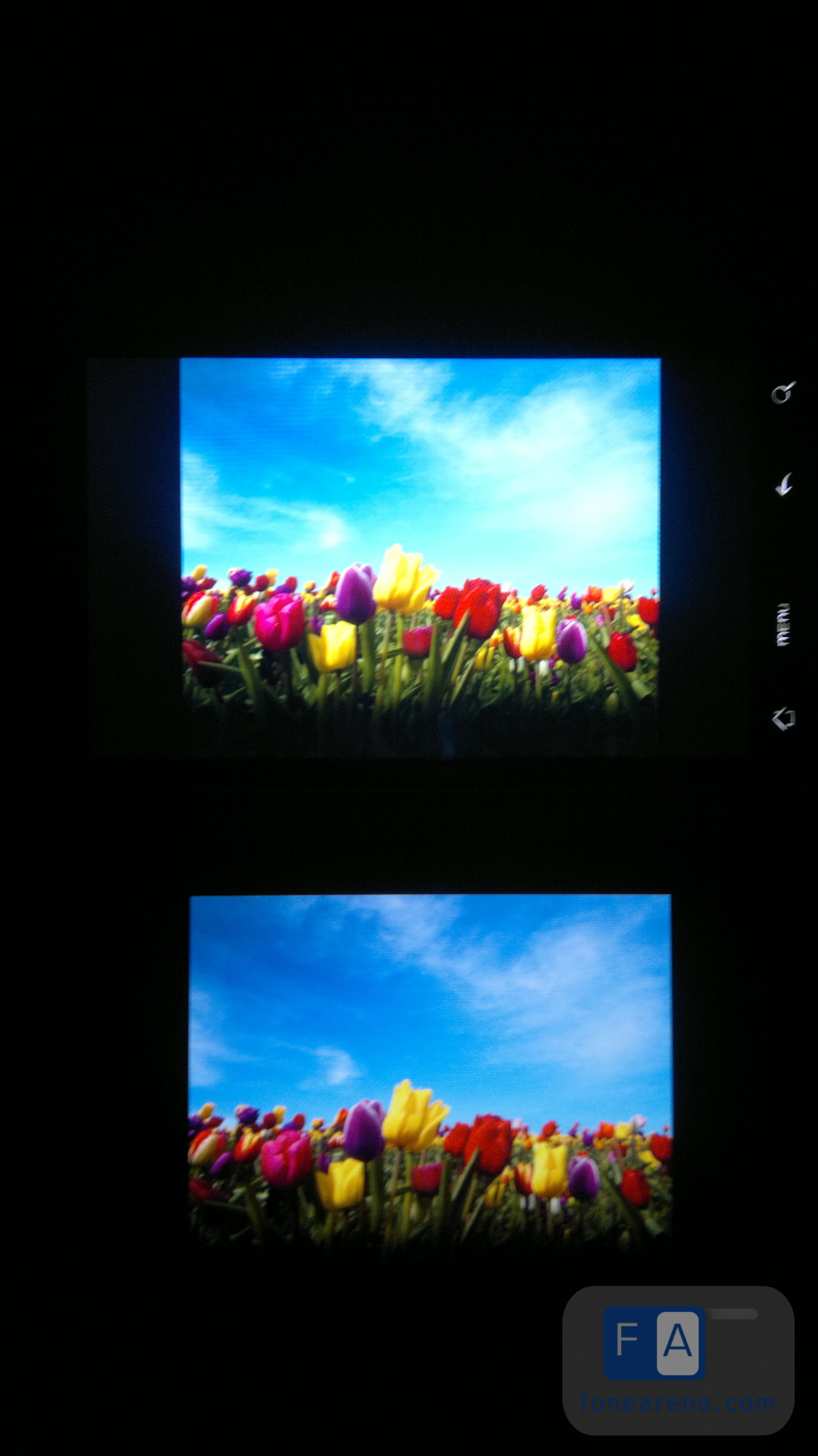
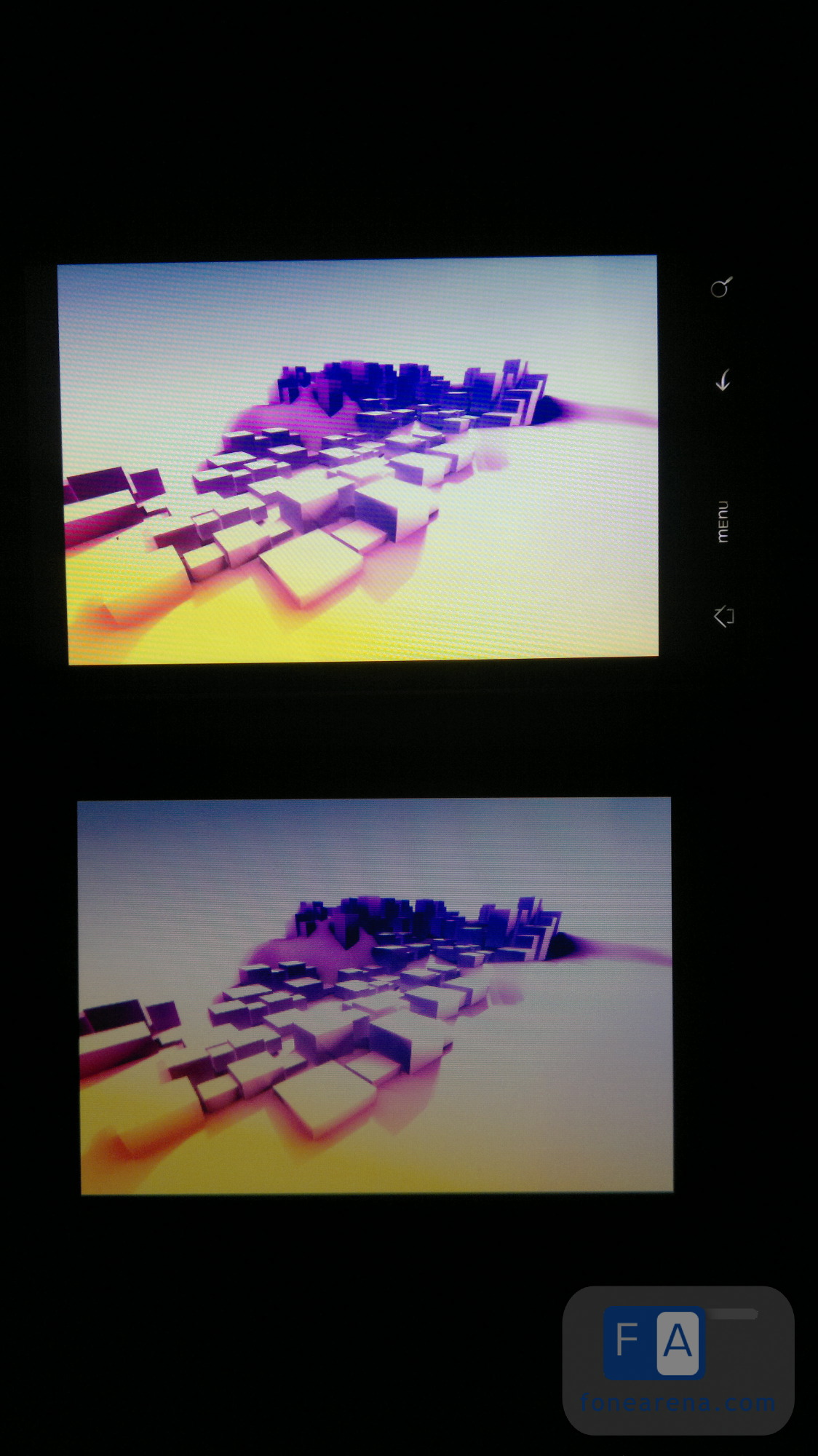
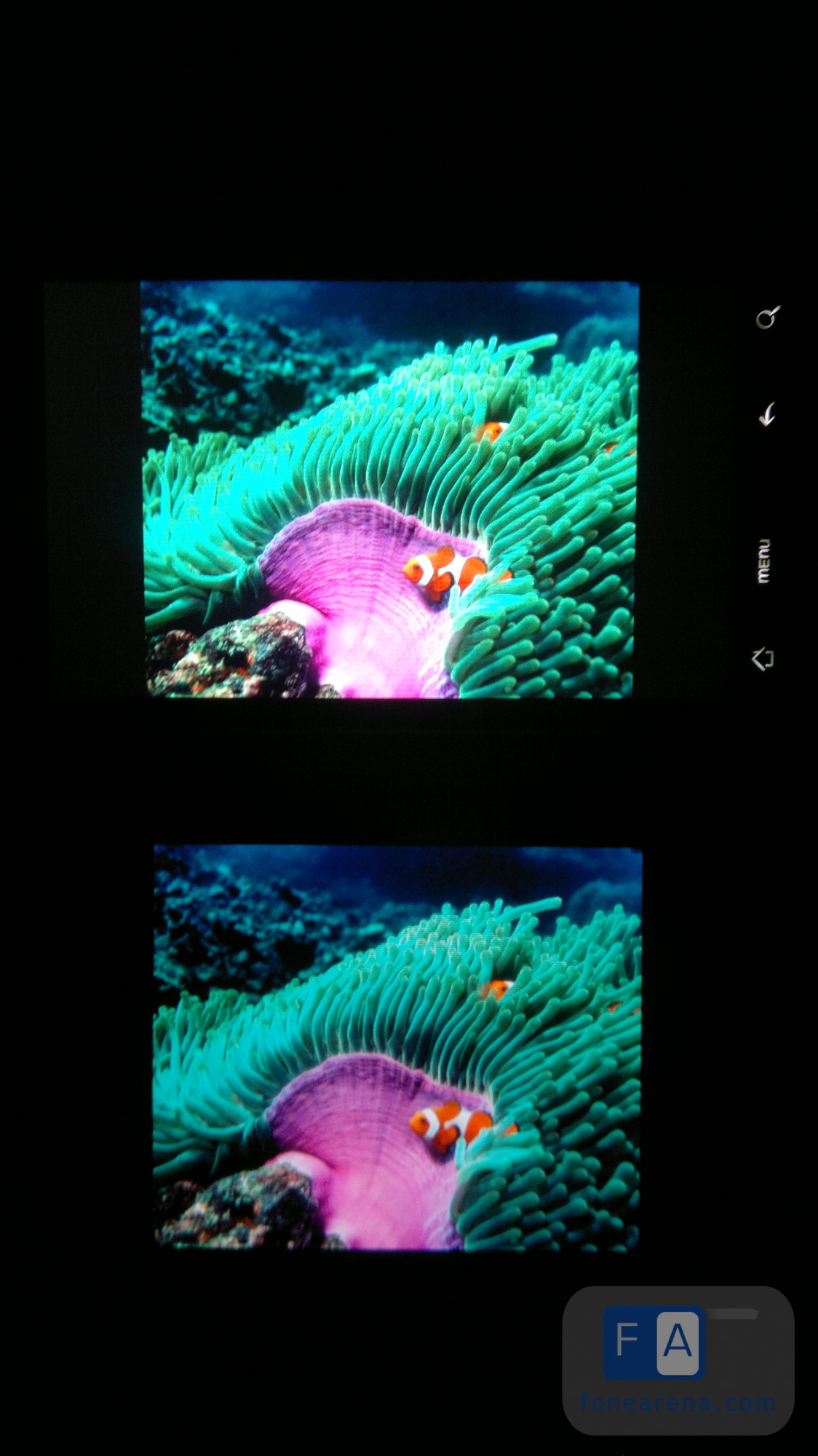
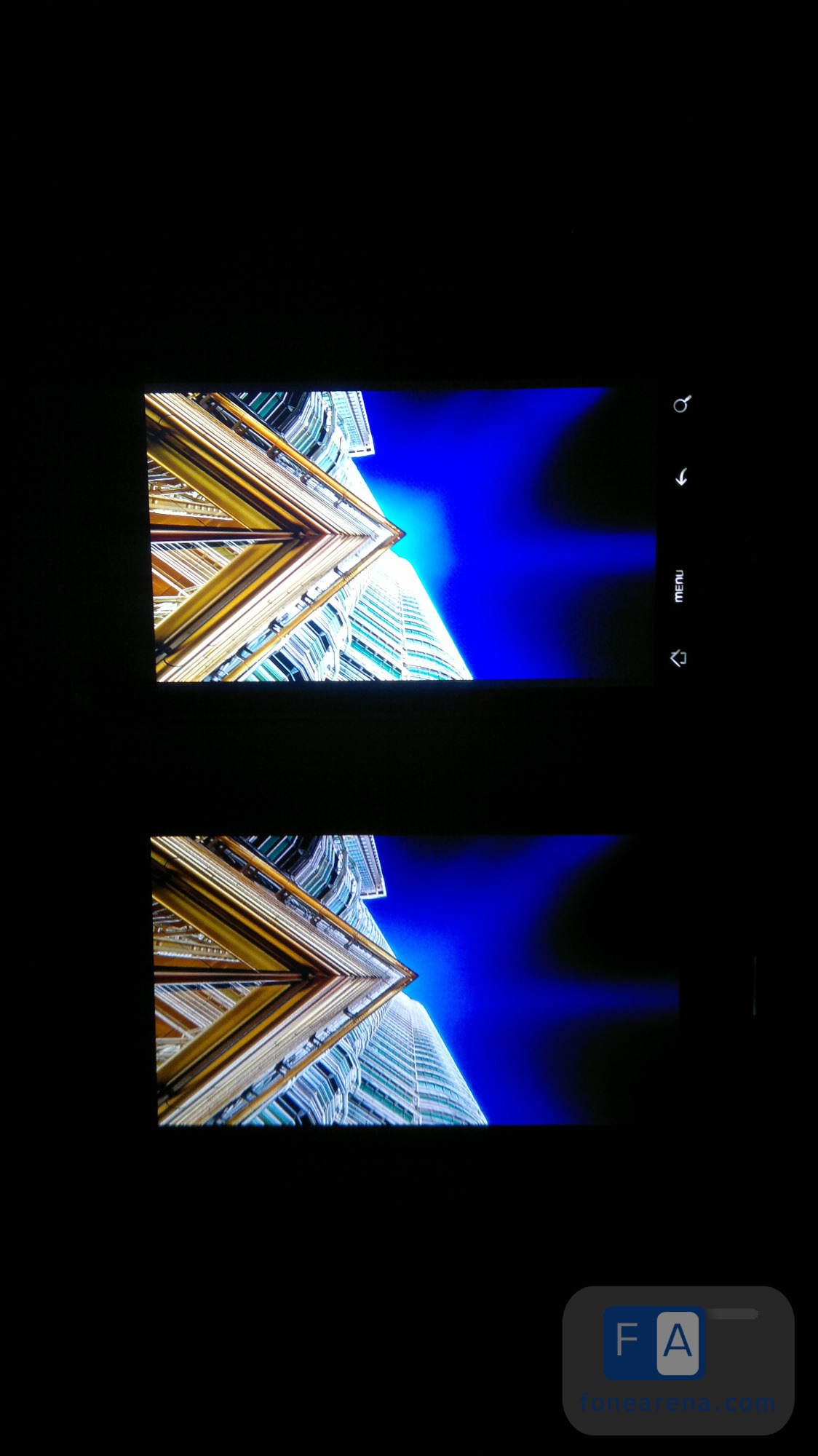
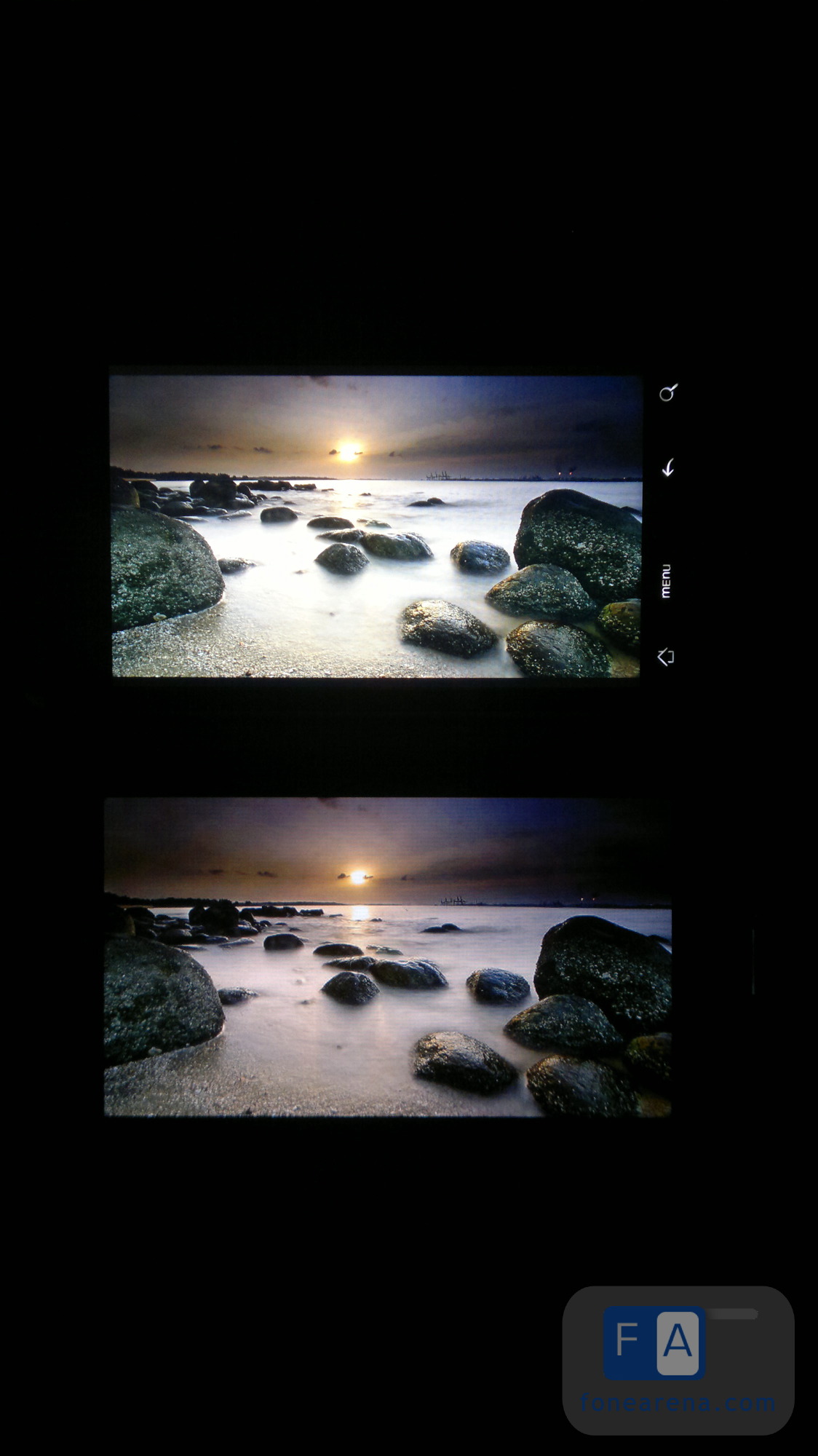
I set out to do a few pictures to compare the S-LCD and the CBD displays indoors. Both devices were pumped to the highest brightness ranking, and chosen to display the same pictures, in a pitch black room. In the below images, the HTC Desire Z is on top, while the Nokia E7 is on the bottom. Click on the thumbnails for the full-resolution image.


I was actually quite surprised by the results of this test, as I was expecting the CBD to trump the S-LCD by miles, given its AMOLED nature and the Clear Black technology on top. However, the end result is very close, with the S-LCD showing rather vivid and lively colors and standing up to the CBD. Also, thanks to the fact that the S-LCD is brighter than the CBD (even on 100% for both), it shows as a clear winner for me. I'm pretty sure everyone has their own preferences here, and you will find a lot of people who will prefer the colors displayed by the Nokia E7, but I don't. The S-LCD has won me over.
In Conclusion
As you can see, there are advantages and inconveniences for both technologies. If you're an outdoor person, whether you work outside, or your job has you on the road frequently, or you love going out and taking pictures, the Super-LCD isn't for you. It might be OK but that's only on high brightness settings, which reduce battery life a lot. By comparison, the CBD display is perfectly visible outdoors and doesn't consume a lot of battery, making it ideal for on-the-go persons.
However, if you spend most of your time indoors, the S-LCD will prove to be a better choice. Thanks to its ability to go to really low brightness, and its vibrant colors, it will look and work perfectly well in any room or office. The CBD, by comparison, is harsh on the eyes in dark environments, and has relatively darker and less vibrant colors.

<!-- Begin SexyBookmarks Menu Code -->
<!-- End SexyBookmarks Menu Code -->